August 17, 2026



October 15, 2025
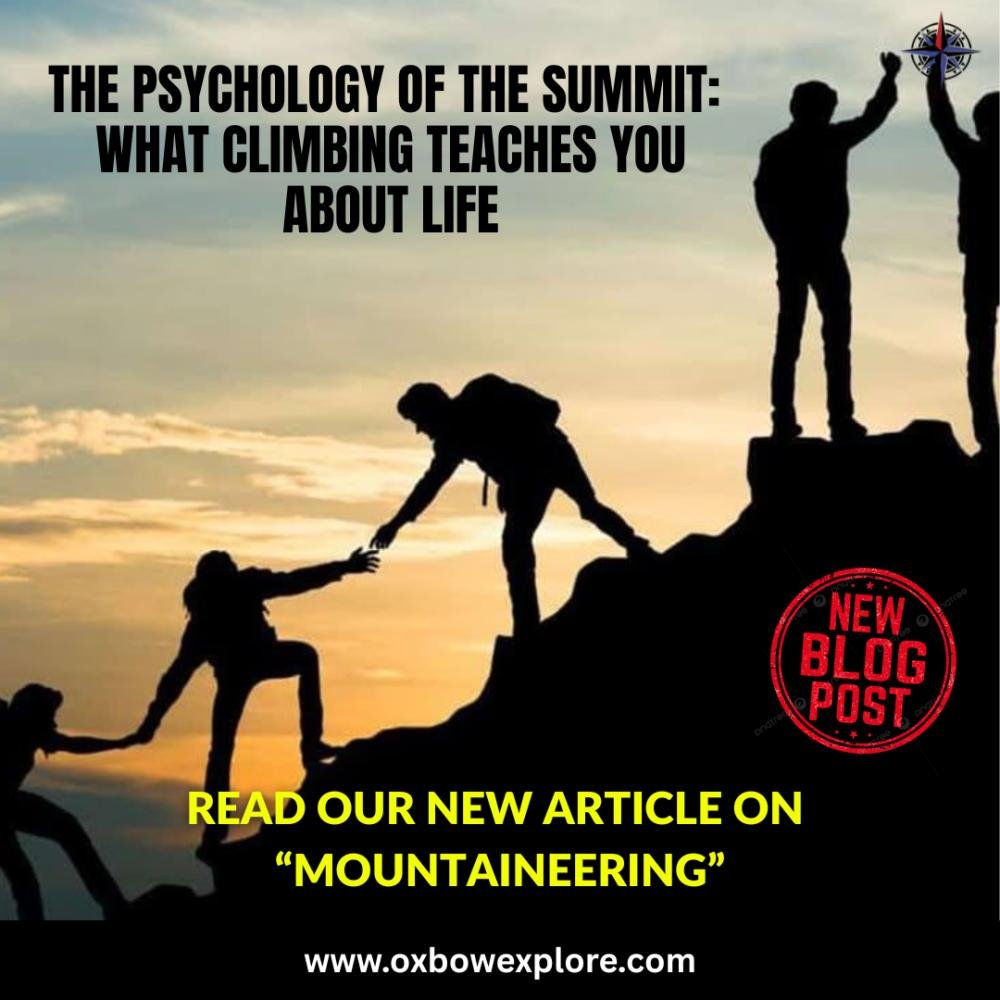
THE PSYCHOLOGY OF THE SUMMIT: WHAT CLIMBING TEACHES YOU ABOUT LIFE
The summit is not just a place—it’s a state of mind.
There’s something quietly transformative about standing on a mountain summit. The air thins, the noise of the world fades, and in that silence, the human spirit finds clarity. Mountaineering is more than a physical pursuit—it’s a psychological journey that reveals who we truly are when the layers of comfort are stripped away.
The Summit is Never Just the Top
In mountaineering circles, there’s a phrase often repeated: “The summit is only halfway.”
It’s a sobering reminder that the climb is as much about endurance, decision-making, and humility as it is about triumph.
Consider the story of Sir Edmund Hillary and Tenzing Norgay, the first climbers to summit Everest in 1953. Their achievement wasn’t just about strength—it was about resilience and presence of mind. Hillary later said that what stayed with him most wasn’t the view from the top, but the realization that courage and caution must coexist.
Lesson: Success is not a destination—it’s the balance between ambition and awareness.
Discomfort Breeds Growth
In the world below, comfort is often seen as success. But in the mountains, comfort is the enemy of growth. Climbers deliberately choose discomfort—cold winds, sleepless nights, unpredictable weather—because it reveals resilience that modern life rarely tests.
Take Arunima Sinha, the world’s first female amputee to climb Mount Everest. After losing a leg in a tragic accident, she turned her pain into purpose. Her climb wasn’t just physical; it was an ascent of spirit. “The mountain didn’t test my leg,” she said. “It tested my will.”
Lesson: Pain is temporary. Purpose endures.
The Mind as the True Muscle
Every expedition has a point where the body wants to quit. That’s when the climb becomes psychological. Mountaineers often speak of a flow state—a meditative rhythm of breath, focus, and movement that keeps them going when logic says stop.
During the IMF Climbathon at Bara Shigri Glacier (2024), young mountaineers faced extreme altitude fatigue. Yet through team morale, mindfulness, and visualization techniques, they completed an ascent to an unnamed 5,700 m peak. Their success later became a case study in mental conditioning under stress used in NIMAS training.
Lesson: The mind is the climber’s strongest rope—the one that holds when everything else weakens.
Leadership in Thin Air
Mountaineering is also a masterclass in leadership and decision-making. A leader on an expedition doesn’t just chart routes—they read people, sense fatigue, and make life-saving calls.
The 1996 Everest disaster, immortalized in Into Thin Air, showed how overconfidence and poor judgment can turn fatal. The mountain doesn’t tolerate ego… it demands empathy and collective strength. Expedition leaders to peaks like Everest, Kangchenjunga often say their greatest takeaway is not authority, but listening.
Lesson: Real leadership isn’t about commanding. It’s about caring.
Every Descent is a Beginning
The descent is where reflection begins. Climbers often describe a deep sense of peace after returning to base — a quiet gratitude for warmth, breath, and companionship.
Mountaineering, in this sense, mirrors life. You strive for years to reach your “summit,” only to realize the joy lies not at the top, but in the person you became on the way up.
Lesson: Coming down with humility is as important as going up with determination.
Case Study: The Siachen Glacier Trek—When Civilians Climbed with Soldiers
In 2023, Oxbow Explore, in collaboration with the Indian Army, organized a civilian trek to the Siachen Glacier — the world’s highest battlefield. Participants, including entrepreneurs, doctors, and artists, trained alongside soldiers and trekked to forward posts.
It wasn’t a climb to conquer a peak, but a journey to understand endurance, teamwork, and service. One participant reflected,
“At 16,000 feet, surrounded by men who live here year-round, you stop asking ‘why ’me?’—you start asking ‘how can I do more?’”
Lesson: The summit gives perspective—it changes how you see yourself, your challenges, and your purpose.
Life Lessons from the Mountains
- Resilience is learned. Each step through hardship rewires your mind for strength.
- Humility sustains success. The mountain always has the last word.
- Purpose outlasts pain. Climb for meaning, not ego.
- Connection creates power. No summit is reached alone.
- Reflection completes achievement. The journey matters as much as the peak.
The Mountain Within
Every person has a mountain—a dream, a fear, or a challenge that looms large.
Mountaineering teaches us that climbing isn’t about conquering nature but about mastering ourselves.
Whether you’re scaling a 6,000-meter peak or navigating the quiet climbs of everyday life—keep moving, stay aware, and respect the climb.
Because the real summit isn’t in the clouds.
It’s in the mind.
Latest Articles

MOUNT KUN

HOW BORDER TOURISM IS OPENING NEW ROUTES FOR MOUNTAINEERS
January 6, 2026
UNCLIMBED PEAKS OF INDIA: THE NEXT FRONTIER IN EXPLORATION
December 2, 2025

THE ANATOMY OF ENDURANCE
October 23, 2025
THE PSYCHOLOGY OF THE SUMMIT: WHAT CLIMBING TEACHES YOU ABOUT LIFE
October 15, 2025
