August 17, 2026


June 16, 2025
BEHIND THE SCENES: HOW A MOUNTAINEERING EXPEDITION IS PLANNED IN INDIA
Ever wondered what goes into planning a mountaineering expedition in India?
From permits to porters, here's a detailed look behind the scenes of how expeditions are built step by step.
Mountaineering in India is not just a test of endurance—it’s a deep logistical ballet played out across high altitudes, unpredictable terrain, and shifting weather. While summit photos tell one part of the story, the real adventure often starts long before the first boot hits the trail.
At Oxbow Explore, where we curate concept-led expeditions across India’s frontier landscapes, we know what it takes to bring a vision to life at 20,000 feet. Here's a behind-the-scenes look at how a mountaineering expedition is planned in India, from ideation to execution.
1. The Big Idea: Why This Peak?
Every expedition starts with a purpose. It could be:
- A first ascent of a virgin peak
- A tribute expedition with a message (e.g., honouring war heroes or empowering women)
- A technical challenge for elite climbers
- A training climb for aspiring mountaineers
Route selection, accessibility, symbolic value, and terrain difficulty all influence this first step. Often, research includes satellite maps, past expedition reports, and discussions with local villagers and guides.
2. Permissions & Paperwork
Mountaineering in India, especially near border areas like Sikkim, Arunachal, and Ladakh, requires multiple clearances:
- Peak booking through the Indian Mountaineering Foundation (IMF)
- Inner Line Permits (ILPs) for restricted regions
- Defense or ITBP permissions in sensitive zones
- Environmental & forest department clearances
This step can take weeks or even months and requires accurate documentation, expedition objectives, team credentials, and detailed route plans.
3. Team Selection & Training
An expedition is only as strong as its team. Planning involves
- Selecting experienced climbers or training newcomers
- Assigning roles: lead climber, support climbers, logistics manager, medical-in-charge
- Pre-expedition conditioning, especially for high-altitude endurance
- First-aid and self-rescue drills
At Oxbow Explore, we ensure each participant is aligned not just technically, but also with the ethos and narrative of the expedition.
4. Logistics: The Invisible Engine
From Delhi to the base camp, every step is coordinated meticulously:
- Tents, sleeping bags, ropes, crampons, cooking equipment
- Local porters, high-altitude guides, cooks, yaks/mules
- Food planning (think high-carb, lightweight, altitude-friendly meals)
- Emergency gear: oxygen cylinders, stretchers, satellite phones
- Vehicle support till road ends
For remote peaks, advance recce teams are sometimes sent to check glacier conditions or trail accessibility.
5. Setting Up Base Camp & Acclimatization
Once at the mountain’s base, the next few days go into
- Establishing Base Camp (BC) with communications, kitchen, and shelter
- Acclimatization walks to higher altitudes
- Setting up Advance Base Camp (ABC) and higher camps depending on the peak's height and route
- Ferrying equipment and supplies between camps
This phase can last 7–15 days, depending on weather and team performance.
6. Weather Windows & Summit Strategy
The most unpredictable factor—the weather—is monitored daily. Decisions are made based on:
- Satellite weather updates
- Wind speed at summit altitude
- Snowfall forecasts and avalanche risk
Once a weather window opens, the team makes its summit push—usually a 12–18 hour effort starting in the dark. Timing, pace, hydration, and team coordination are critical.
7. The Summit—and the Descent
While reaching the summit is exhilarating, getting back safely is the true success. Most accidents occur during descent, so the strategy includes
- Coordinated descent in small teams
- Constant communication with base
- Recovery at lower camps
8. Post-Expedition Cleanup & Impact
We emphasize Leave No Trace principles:
- All waste, especially non-biodegradable, is packed out
- Campsites are cleaned
- Local porters and guides are compensated fairly
In addition, many of our expeditions include community engagement, local hiring, or skill-building initiatives in the regions we explore.
Why It Matters
Mountaineering in India is a powerful way to connect with the land, its people, and one’s own inner resilience. But what the world sees as a few photos on a summit often comes from months of meticulous planning, coordination, and local partnership.
At Oxbow Explore, we take pride in not just climbing mountains but crafting stories of purpose, participation, and positive impact.
Are you ready to be a part of a mountain story that matters?
Visit: www.oxbowexplore.com
Get in Touch: Plan your next expedition with our expert team
Latest Articles

MOUNT KUN

HOW BORDER TOURISM IS OPENING NEW ROUTES FOR MOUNTAINEERS
January 6, 2026
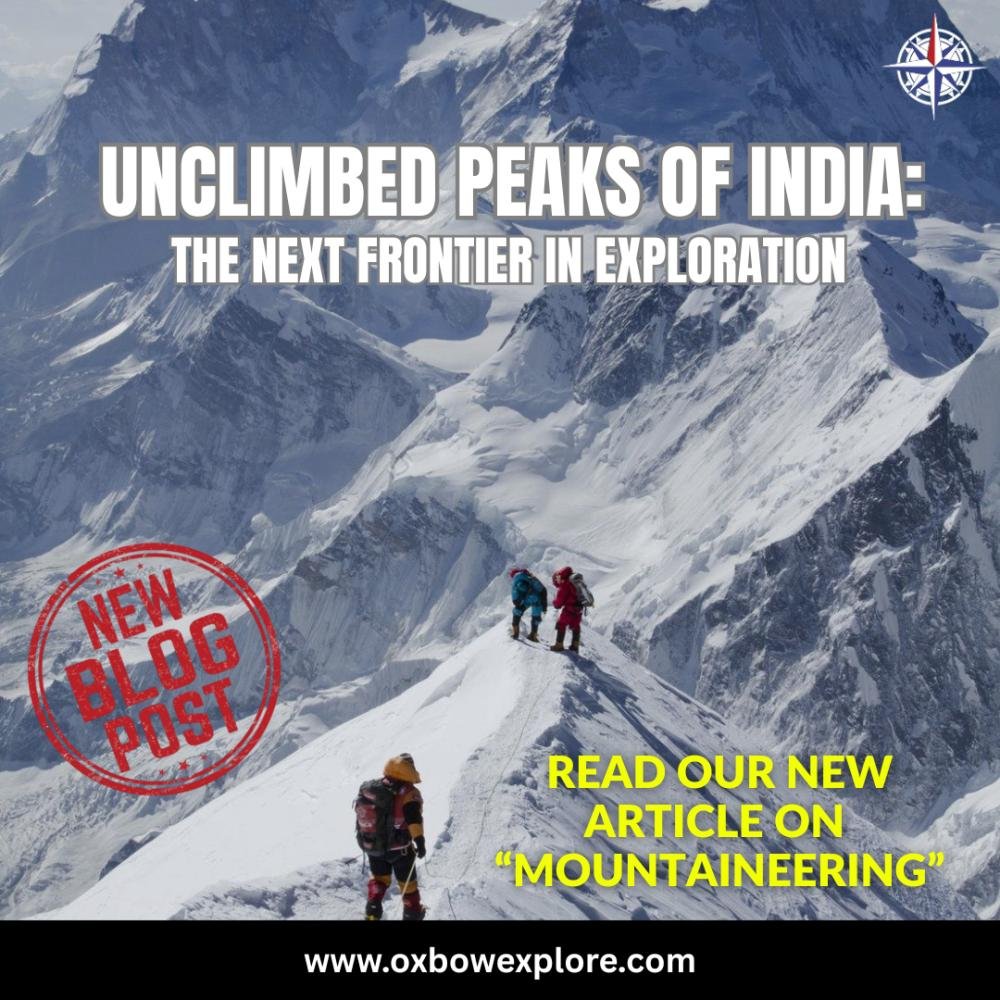
UNCLIMBED PEAKS OF INDIA: THE NEXT FRONTIER IN EXPLORATION
December 2, 2025

THE ANATOMY OF ENDURANCE
October 23, 2025

THE PSYCHOLOGY OF THE SUMMIT: WHAT CLIMBING TEACHES YOU ABOUT LIFE
October 15, 2025
