September 15, 2026



September 15, 2026
How India’s Geography Makes It One of the World’s Most Diverse Adventure Destinations
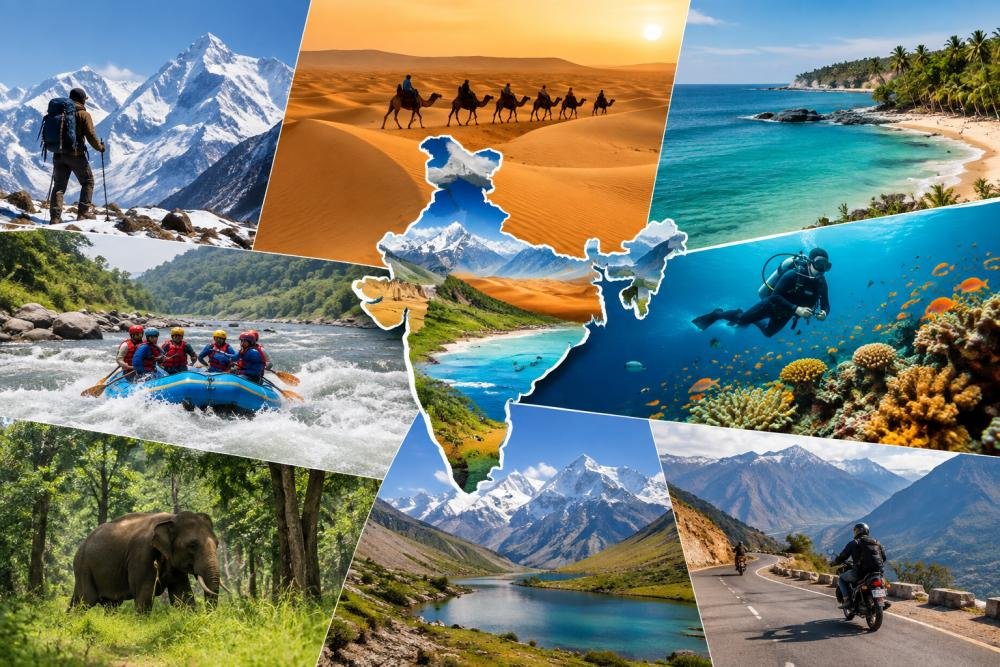
India is the 7th-largest country in the world, and its geography is as diverse as its culture. From north to south and east to west, just as India’s culture, language, food and traditions change from region to region, so does its geography, climate and landscape.
Few countries offer such a dramatic combination of snow-covered mountains, cold deserts, ancient ranges, forests, plateaus, rivers, tropical coastlines and islands. And with every change in terrain comes a different kind of adventure.
North India – Himalayas, Trans-Himalayas & the Cold Desert
The north is home to the mighty Himalayas, but India's mountain landscape extends beyond the main Himalayan range. The Karakoram and Trans-Himalayan ranges, including the Ladakh and Zanskar ranges, create some of the country's most dramatic high-altitude terrain.
In Ladakh, this geography gives rise to a vast high-altitude cold desert. With very low precipitation, extreme temperatures and elevations often exceeding 3,000 metres, the region is characterised by barren mountains, deep valleys, glaciers and high passes.
This unique landscape makes Ladakh a natural playground for high-altitude trekking, mountaineering, mountain biking, camping and expedition travel.
Further across the Himalayas, from Himachal Pradesh and Uttarakhand to Sikkim and Arunachal Pradesh, the terrain changes again into forests, alpine meadows, valleys and lakes offering a completely different range of adventures.
East & Northeast India – Ghats, Hills and Forests
Moving east, India presents another geographical character.
The Eastern Ghats form a discontinuous range along parts of eastern India, broken by major rivers and merging with surrounding plateau landscapes. Further northeast, the Purvanchal or Eastern Hills include the Naga, Patkai and Mizo hills.
Across Odisha, Jharkhand and the Northeast, forests, hills, rivers and waterfalls create opportunities for trekking, camping, river journeys, waterfall exploration and discovering remote landscapes and communities.
Here, adventure is less about altitude and more about exploration and wilderness.
West India – Desert, Ancient Ranges and the Sea
Western India offers some of the country's most striking contrasts.
In western Rajasthan, the Thar Desert stretches across vast sandy terrain, creating opportunities for desert safaris, camping, off-road driving and long-distance expeditions.
The region is also home to the ancient Aravalli Range, which extends from Gujarat through Rajasthan and Haryana towards Delhi, offering a very different terrain for outdoor exploration.
Further west, the landscape meets the Arabian Sea, opening possibilities for surfing, kayaking, sailing, coastal drives and marine exploration.
Western Ghats – The Sahyadris
Along the western side of the peninsula rise the Western Ghats, also known as the Sahyadris.
A UNESCO World Heritage Site and global biodiversity hotspot, the Western Ghats are older than the Himalayas and play an important role in India's monsoon patterns.
The northern section includes rugged peaks such as Kalsubai, Salher, Mahabaleshwar and Harishchandragarh, while passes such as Thal Ghat and Bhor Ghat connect the Konkan plains with the Deccan Plateau.
Their forests, valleys and mountains create opportunities for trekking, camping, wildlife exploration and mountain adventures.
Central India – Forests, Plateaus and the Vindhyas
At the heart of India lies a landscape of forests, plateaus, rivers and wildlife.
Madhya Pradesh, often called the Heart of India, along with parts of Chhattisgarh, Jharkhand and Odisha, offers diverse natural terrain. The Vindhya Range, a system of ridges and highlands across central India, adds another geographical dimension.
The Tropic of Cancer passes through Madhya Pradesh, while the region's forests and rivers create opportunities for wildlife exploration, trekking, camping and offbeat expeditions.
South India & The Islands – Where Land Meets the Sea
As India stretches south, the sea becomes an integral part of its geography. The peninsula is bordered by the Arabian Sea to the west, the Bay of Bengal to the east and the Indian Ocean to the south.
Its combination of hills, forests, beaches, backwaters and tropical landscapes creates opportunities for surfing, kayaking, sailing, diving, trekking and coastal expeditions.
Beyond the mainland, the Andaman and Nicobar Islands in the Bay of Bengal and Lakshadweep in the Arabian Sea add another dimension, with opportunities for scuba diving, snorkelling, kayaking, sailing and island exploration.
One Country. Endless Adventures.
From the cold desert of Ladakh to the Himalayas, from the Eastern Ghats and northeastern hills to the Thar Desert, from the Aravallis and Vindhyas to the Sahyadris, India's geography keeps changing—and so does the adventure.
India's geography doesn't just give us different places to explore. It gives us different ways to experience adventure.
Latest Articles
The Art of Travelling Alone
September 11, 2026

The Difference Between a Tourist and a Traveller
September 8, 2026
The Hidden Adventure Destinations of India
September 7, 2026

Love to Travel? What If You Could Build a Career Around It?
August 20, 2026
